
The Double Injustice Campaign
Seeking Justice for the families of Naomi Hunte and Fiona Holm
Double Injustice: Naomi Hunte and Fiona Holm
Naomi Hunte and Fiona Holm were killed by the same violent partner, Carl Cooper, within 16 months of each other. Both were from African Caribbean backgrounds, and both had mental health conditions which made them very vulnerable. On both occasions, the police knew of the risks to their lives but did not take any effective action, and both times the result was the woman’s death. Both deaths were preventable.
Sign the families’ petition for justice here
NEWS Public Meeting in Lewisham London
Sunday 12th July 2.30-4.30pm
Fiona and Naomi’s families are asking us all to come together to ensure that the police are held accountable for their failures and to ensure nothing like this ever happens again.
As friends, as neighbours, as concerned citizens, as campaigners for women’s rights and against racism, we need to support their fight for justice.
Come to this public meeting to learn more about the campaign and what you can do. This struggle is not only for Naomi and Fiona, it is for all women harmed by police failures.
SPEAKERS
· Savannah Holm-Aderemi, Fiona’s daughter
· Basil Hunte, Naomi’s father
· Ellis Skillen, Fiona’s sister
· Pragna Patel, co-director, Project Resist
· Suresh Grover, founder, The Monitoring Group
· Simon Israel, Channel 4 News correspondent
· Natasha Walter, author and campaigner

Naomi’s story

Naomi Hunte was aged 41 years when she was found dead in her flat on 14 February 2022. Between November 2020 and October 2021, Naomi had reported Cooper to the police at least seven times for his actions including sustained harassment and stalking, assault, threatening behaviour and for “forc[ing] himself on her”. Despite the repeated police callouts and Cooper’s sustained and escalating violence, crime records were not opened and risk assessments were not undertaken on each occasion. Cooper was arrested once but then released without charge. In effect, Naomi was never protected. Finally, Cooper killed her by repeatedly stabbing her.
When Cooper was ultimately sentenced, the trial judge commented that “The murder probably involved a motivation related to sexual conduct, possibly due to Ms. Hunte refusing to have sex with you.’ Carl Cooper was arrested by the police for her murder the same day but he was released on bail. In February 2023, Cooper was re-interviewed but instead of being charged he was “released under investigation” with no bail conditions. By this time Carl Cooper was already seeing Fiona Holm.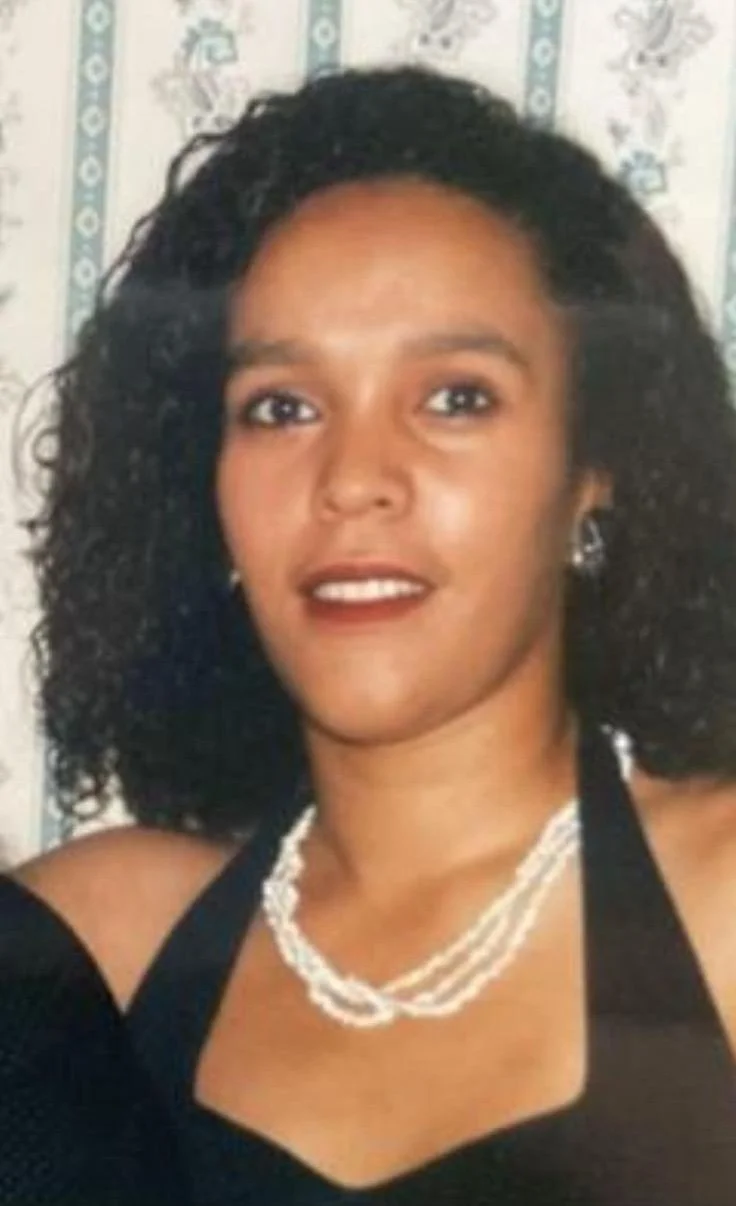
Cooper's trial started on 4 June 2024 at Woolwich Crown Court. He was convicted of both Noami and Fiona’s murders. On 2 July 2024, Cooper was sentenced to life imprisonment with a minimum term of 35 years. Although Carl Cooper was eventually apprehended, prosecuted, convicted and sentenced for both murders, no one in the police is yet to be held accountable for these failings.
Fiona’s Story

Fiona Holm was aged 48 years – but had the mental age of a teenager – when she entered into a relationship with Carl Cooper in late 2022 while he was still on bail for Naomi’s murder. She suffered from autism and alcohol dependency issues.
On 8 April 2023, Fiona called the police alleging that Carl Cooper had hit her with a crow bar. When she spoke to the police, she alleged that he had previously stabbed her with a screwdriver. However, after Cooper was interviewed, and despite the police knowing Cooper’s background and that he was under investigation at the time for Naomi’s murder, the police closed the case without further investigation.
Fiona Holm was last seen on 20 June 2023. A third party call the police to report that Carl Cooper had murdered someone but this was treated as a hoax and not actioned. Fiona’s family and social worker repeatedly called the police from the end of June, but police did not arrest Cooper until 11 July 2023 giving him the opportunity to dispose of Fiona’s body. Fiona’s family were forced to try and investigate her disappearance themselves. By the time Cooper’s home was searched he had stripped his home and burnt key evidence. Fiona’s body has yet to be found despite her family’s efforts to find her, so they cannot even begin the process of grieving for her loss.Why this campaign?
Project Resist is supporting the families of Naomi and Fiona who have come together to make sense of why the police failed so abysmally in their duty of care to both women. In the absence of any other explanation for these failures, the families believe that the police were able to ignore both women simply because they were black, female and disabled. They are seeking urgent answers from the police in their struggle for justice.
"The campaign is important to me because, if the police had listened to my sister Fiona and Naomi, would both still be here. I've lost an important person in Fiona. The police should have done more when she went missing. They did nothing. We had to physically go and look for her ourselves, which we shouldn’t have had to do. I feel angry, really angry and hurt. How can they expect us to trust them at all? " (Elise - Sister of Fiona)
"We want to find mum’s body and lay her to rest. We need the future to be better than it has been for our girls and boys. I feel angry and hurt. You see on the video - the police didn’t care when they talked to us. Vulnerable people like mum and Naomi should be entitled to more support. "(Savannah – daughter of Fiona)
“The police cannot be trusted to do what they are supposed to do. It’s a big let-down. It took a year for him to go and kill another lady. If they had done their job, he would not have been in a position to kill for a second time. It’s hard to understand why." (Basil, father of Naomi)
Tragically, the deaths of Naomi and Fiona are only the latest, albeit particularly egregious examples, in a long line of cases where reports from women of abuse at the hands of violent partners have been dismissed and investigations into their subsequent murders have been botched.
The Issues
These cases raise serious questions about continuing police failures in responding to domestic abuse cases. Cooper was a serial perpetrator of high-risk domestic abuse against multiple women and had been convicted in Jamaica in 1989 for four offences of violence against women. Cooper had also been previously prosecuted in the UK in 1999 for the attempted murder of his ex-partner and it is understood that he had also been a suspect in multiple other violent offences against women.
In Cooper’s sentencing remarks, the trial judge stated the following:
“You have a history of acting in a controlling and coercive manner to your sexual partners. In 1989 you were convicted in Jamaica for four offences of violence. Ms Hunte had made previous complaints to police about your controlling and coercive behaviour. Ms Holm had also made a previous complaint to police about your behaviour. She had also complained to friends that you had stabbed her with a screwdriver. Other women have also made similar complaints about your conduct. I am sure that you have, over many years, been a great danger to women.”
We hear about government claims of ‘clamping down on police failings’, and the police speak about treating domestic abuse as a ‘top priority’, ‘on par with terrorism’.
In practice, what we see is an endless repetition of the same failures year after year. There is a clear lack of political will needed to hold individual police officers and the wider criminal justice system to account.
Trust in the police and criminal justice institutions has continued to erode while the state fails to grapple with the institutional perpetuation of racism, misogyny, ableism, and abuse of power that dominates the policing of violence against women.
The Campaign’s Demands
This campaign has been launched to:
1. Call on the police to renew their search for Fiona’s body with regular updates to the family, and call for witnesses to come forward with any information that can help to locate her body.
2. Build support for the families in their struggle to ensure effective investigations into the police misconduct and discrimination they have had to endure in both cases.
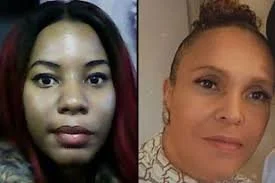
Naomi and Fiona
3. Call on the government to work with us to introduce effective measures to fulfil the state’s obligations to protect, prevent and prosecute domestic abuse cases and deliver real police accountability. We seek:
a) a radical overhaul of the current system of policing domestic abuse and domestic abuse-related homicides;
b) a recognition of the obstacles faced by disabled and minoritised women in engaging with the criminal justice system and accountability when the police fail to take reasonable steps to support women in accordance with their own guidance;
c) the implementation of robust disciplinary measures where there are clear failures in the investigation of domestic abuse/homicides, including in relation to the effective supervision of those investigations.
" We want to find mum’s body and lay her to rest. We need the future to be better than it has been for our girls and boys. I feel angry and hurt. You see on the video - the police didn’t care when they talked to us. Vulnerable people like mum and Naomi should be entitled to more support. "
(Savannah – daughter of Fiona)
Double Murders or Double Injustice?
In the aftermath of Carl Cooper’s murder trial, the police patted themselves on the back for having secured a conviction for the double murder. What they failed to acknowledge is that this was not just a case of double murder but of double injustice generated in a large part by their own mistakes, negligence and inaction. Had they taken effective action in accordance with the law and guidelines on domestic abuse and coercive control, both women might still be alive today.
At the heart of these deaths lies a continuum of abject police failure: their failure to investigate the reports from Naomi and Fiona of serious and life-threatening violence; their failure to take steps within their powers to protect Naomi, their failure to adequately investigate Fiona’s allegations of serious violence, their failure to warn Fiona about Carl Cooper’s previous history of violence against Naomi and multiple other women; their failure to connect both cases; and their failure to conduct a timely and proper investigation into both of their deaths.
To add insult to injury, after Naomi’s murder the Metropolitan Police did not record the case as one requiring an investigation or refer the case to the Independent Office for Police Misconduct, despite the fact that Naomi had repeatedly reported Cooper before she was killed and that her family had expressed concern that she had been the victim of overwhelming police failure to protect her. Whilst Fiona’s case was referred to the IOPC after her murder, the IOPC declined to investigate. Following legal submissions, the IOPC finally agreed to open an independent investigation which is currently underway. As well as exploring the broader circumstances of the death the IOPC has opened misconduct investigations into 10 officers, of which 6 meet the severity of gross misconduct. The families are now waiting for the outcome of these investigations.
For more information about the campaign email: comms@projectresist.org.uk
Campaign Media & Updates:
26th February 2026, BBC News: