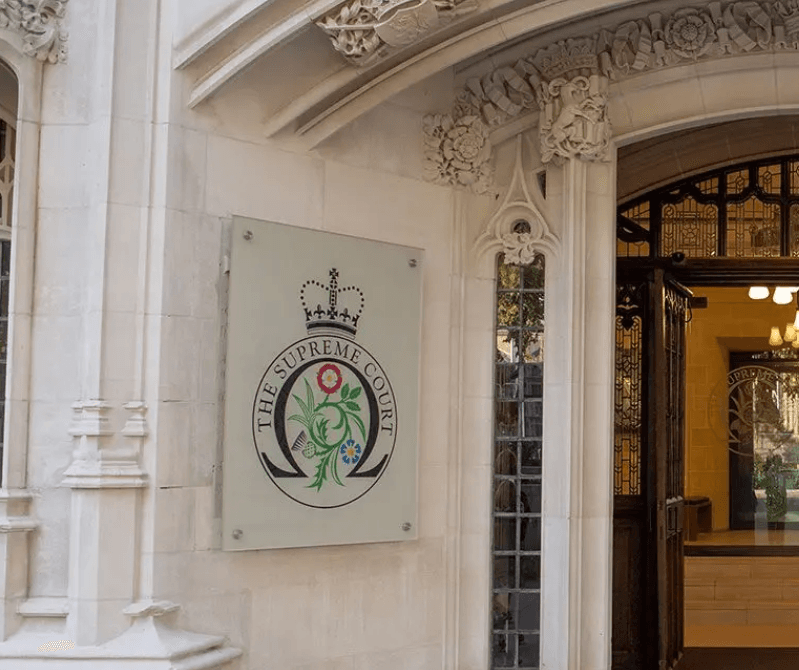
On 13 October 2026, the Supreme Court will hear R v Field, a case that could decide whether abusers can be held criminally responsible for homicide when their abuse drives a victim to take their own life. Project Resist, alongside Advocacy After Fatal Domestic Abuse (AAFDA) and the Centre for Women's Justice, have been granted permission to intervene.
What is the case about?
At Field's original trial, the accused was convicted and held responsible for the death of his victim, in circumstances where it was the victim's own act that led to his death. This conviction was overturned on appeal but it raised wider questions about the homicide law which has implications for domestic abuse-related cases and in particular the question of whether an abusive partner can be held responsible for homicide in such situations.
The Supreme Court will now examine this case and determine the legal test of causation in homicide law: when can someone be said to have caused a death where the immediate act was that of the victim? The question may sound technical, but the answer will decide whether the law recognises what many bereaved families are fighting for: recognition that abuse, coercive control, stalking and sexual violence that pushes a person to the edge can amount to homicide.
Why it matters beyond this case
Our concern is that the outcome of this case will shape how police and the Crown Prosecution Service decide whether to prosecute abusers in similar cases. The current threshold for proving causation is already high, and prosecutions are rare. Only one manslaughter conviction has been secured in England and Wales, in 2017. Attempts in the cases of Gurjit Dhaliwal in 2006 and Keina Dawes in 2025 failed.
If the test is narrowed, it will become far harder, and perhaps impossible, to hold abusers responsible for the suicides of their victims.
A growing crisis
The need for the law to remain effective in securing justice for victims is urgent. Data from the Domestic Homicide Project shows that suicides following domestic abuse have now outnumbered domestic abuse-related homicides for three years in a row. In 2025, 150 suspected suicides following abuse were recorded in England and Wales, up from 98 in 2024 and 93 in 2023. Most victims were women and most suspects were men.
The picture is likely to be even bleaker for Black and minoritised women, who face considerable barriers to reporting abuse and accessing protection. Under-reporting and under-recording mean reliable data is hard to find. There are signs of progress. The CPS has signalled its determination to prosecute where the evidence is sufficient, and a number of prosecutions are pending. There is growing awareness about potential links between domestic abuse, suicide and homicide. That progress is the result of persistent work by bereaved families.
Our position
Project Resist is arguing that the test for causation in homicide law must not be redefined but remain context specific so that perpetrators of domstic abuse-related suicide can be held crimnially liable for homicide.
As our co-director, Pragna Patel, says: "Our intervention in this case arises from widespread concern that perpetrators of domestic abuse face little or no legal consequences for the serious harm that they cause, even when this drives their victim to suicide. Bereaved families in such circumstances insist that the state should meet its obligations under the Human Rights Act 1998 to punish perpetrators, protect victims and prevent further tragedies. As a result of their efforts, the link between domestic abuse, suicide and the law of homicide has come to be increasingly recognised by the courts. We urge the Supreme Court justices to ensure that these gains are not rolled back in their review of the law of homicide. We cannot and must not go backwards.”
We continue to work alongside the families of those who have died to secure justice. We will be outside the Supreme Court at 9.30am on 13 October with bereaved families, and we will share updates after the hearing.