Justice For Harshita Brella.
#Justice4Harshita
Harshita Brella was 24 years old when she came to Britain from India in April 2024 after marrying Pankaj Lamba. Just seven months later, her body was found in the boot of a car, and Lamba had fled back to India. Harshita’s supporters are fighting for Pankaj Lamba to face justice and for the police in Britain to be held accountable for failures to protect her.
You can find out more about the #Justice4Harshita campaign and how to support it at the launch event on 9 December at 4pm online. Book tickets here.
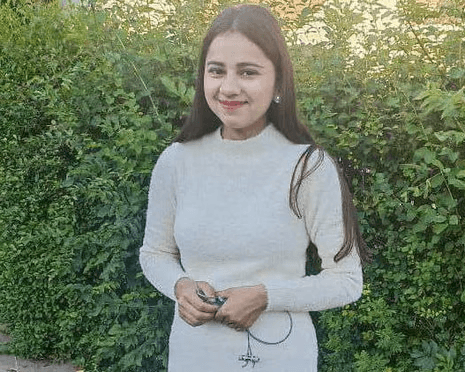
Harshita’s sister, Sonia Dabas, says: ‘We need every possible effort to be made by the authorities in the UK and India to locate Pankaj Lamba and bring him before a court. We also need answers about what happened before Harshita's death, whether more could have been done to protect her, and what will change to prevent another woman and another family going through what we have. We cannot bring Harshita back, but we will not allow her to be forgotten. We want the truth for Harshita - and we will continue to speak for her until we have it."
Why this campaign?
Harshita came to build a new life in Corby in Northamptonshire. Instead, within months she was experiencing domestic abuse. On 29 August 2024, Harshita asked Northamptonshire Police for help. She reported that she had been assaulted by her husband and described previous incidents of abuse and violence. Her disclosures were serious. According to evidence subsequently recorded in Indian court proceedings, she reported an assault in which she alleged that Lamba had threatened to push her from a window.
While the police initially found Harshita accommodation and arrested Lamba, when Lamba broke bail conditions and continued to harass her, they did not take appropriate action. They failed to support her properly or inform her of her rights, leaving her in a vulnerable position.
And on 10 November 2024, less than three months after Harshita reported the abuse, her body was found in the boot of a car in Ilford. It is believed that she was killed four days earlier by Pankaj Lamba, who then fled to India. In March 2025, the Crown Prosecution Service authorised charges against him for murder, as well as rape, sexual assault and controlling or coercive behaviour. But he remains outside UK custody and has not been apprehended, let alone tried and convicted.
Harshita's death raises a number of questions about the failure of the police to protect her, chief amongst these is: what is the point of telling women to report domestic abuse if the police systems cannot keep them safe and all too often officers are not well trained in how to safeguard and protect victims?
This campaign is not about claiming that every failing can be attributed to one individual officer or one decision. It is about examining the chain of responsibility and the institutional failures surrounding a particularly vulnerable woman who had told the authorities that she was being abused and was in need of help.
An investigation by the Independent Office for Police Conduct in 2025 found that four Northamptonshire Police officers have a case to answer for misconduct or gross misconduct relating to the handling and supervision of Harshita's domestic abuse investigation. A tribunal then found that there was inadequate evidence against two officers for misconduct. The two officers facing a gross misconduct hearing will be investigated about whether appropriate investigative actions were set, whether the case was appropriately reviewed, whether supervisory advice was sought and whether Harshita was sufficiently informed about the criminal process and updated.
For Harshita's family, the failings raise questions that cannot be answered simply by disciplinary proceedings against the police, some of which took place behind closed doors. They want to know why the systems designed to protect Harshita did not keep her safe, whether opportunities were missed, and what needs to change so that other women are not placed at similar risk.
Sonia Dabas, says: ‘Harshita went to the police because she was frightened and needed protection. She trusted them believing that asking for help would keep her safe. As her family it is incredibly painful for us to live with the knowledge that she reached out for help, yet she still was not protected. Nearly two years later, our pain is made even worse by the fact that Pankaj Lamba, the man charged with Harshita's murder, has still not been located and brought back to the UK to face justice. Every day that passes without him being found leaves our family feeling that justice for Harshita remains out of reach.’
This campaign is calling for justice, accountability and fundamental change in the way domestic abuse is treated by the police and other public agencies.
The Issues
- A woman's disclosure should trigger effective protection. not treated as an administrative process. Harshita did what society tells victims of domestic abuse to do: she reported her abuse. However, instead of treating her report as the beginning of a coordinated safeguarding response, the police treated it as a bureaucratic process in which responsibility was passed from one department to another with no one taking responsibility for her protection and support.
- High-risk victims require high-level responses. Harshita was identified as high risk and yet the measures that were taken were inadequate. The police initially protected Harshita by imposing bail conditions and obtaining a Domestic Violence Protection Order, but when the protective arrangements came to an end, there was no clear assessment of the continuing high risk that she faced and of what needs to happen next to keep her alive and safe. Risk was seen as static and a tick-box exercise rather than an ongoing process, and her protection was simply reduced to a one-off rather than continuing intervention. There was no attempt to ensure active safeguarding, continuing risk assessments, and effective investigation into the case.
- A failure of basic policing. The IOPC identified a number of serious concerns about the fundamental failure of investigation: no attempt was made to regularly review the case, set investigative actions, seek supervisory advice or communicate with Harshita. These are not specialist or optional elements of policing. They are basic requirements of an effective investigation and safeguarding response.
- A failure to provide support. Harshita was completely isolated and faced immense pressure from Pankaj Lamba and his family to reconcile with him and to accept his behaviour. As a victim of domestic abuse, she was left alone to navigate the criminal justice system. This was especially difficult for her because she spoke little English, did not understand the criminal justice process and was completely isolated from any networks of support. The police failed to properly understand the significance of the cultural pressure that she faced to withdraw the reports that she made to the police about her husband; they failed to use qualified interpreters or to access appropriate specialist help to support her during their investigations.
- A failure to provide a coordinated safeguarding response. The police and, to a limited extent, the agencies that were involved worked independently of each other even though they knew that domestic abuse cases do not fit neatly into organisational boundaries. Harshita's case clearly called for genuine multi-agency safeguarding to take place, with each one taking responsibility for identifying risks, sharing relevant information and ensuring that agreed actions were actually implemented. The responsibility for keeping Harshita safe was simply passed between them.
- Justice must not stop at the border. Pankaj Lamba was under investigation for domestic abuse, but basic police failures meant that he was able to flee the country and evade the serious charge of murder. Furthermore, ongoing failure of co-operation between the police in the UK and the police in India has made the task of holding him accountable even more difficult. Harshita’s family have sought intervention through the Indian courts, including asking for a dedicated Indian government officer to coordinate information sharing about the murder investigation between the UK and Indian police and to provide regular updates to the family, but without success.
There has been a complete lack of transparency on the part of the police and governments in both countries as to what, if any, effort is being made to locate Pankaj Lamba in India and to hold him accountable. It appears as if the pursuit of justice has stopped just because he is no longer in the country.
This campaign has been launched to highlight yet again, systemic failure on the part of the police to protect women from domestic abuse and serious harm. The question the family want answered is “why does the system allow such fatal mistakes to happen again and again and what will change to prevent it happening again?” The family seeks to prevent such failures from becoming normalised and to ensure that individual and institutional accountability is a reality.
The Campaign Demands
Please support Harshita's family in their continuing fight for justice. They should not have to fight this battle alone.
We are calling for:
- The UK government and the police must take urgent and effective steps, including working with the relevant Indian authorities to locate Pankaj Lamba and bring him back to the UK so that he can face the criminal charges in a UK court.
- The UK and Indian government must take joint responsibility for liaising and communicating with Harshita’s family rather than leaving them to navigate their own way through complicated overlapping jurisdictions.
- Harshita’s family must be treated with the dignity and respect that they deserve. They should receive timely, accessible and accurate information about the progress of joint actions, investigations and relevant legal proceedings.
- Harshita’s family must be able to enter the UK when necessary and without delay to take part in criminal and other legal proceedings relating to Harshita’s death.
- Misconduct proceedings including for gross misconduct arising from the IOPC investigation must be completed properly and in a transparent way. Where allegations are proven, appropriate action must follow. But accountability must go further than individual disciplinary proceedings. Northamptonshire Police must demonstrate what mandatory learnings and organisational changes have been made in response to the IOPC's findings.
Harshita’s death must not become another statistic
Harshita's death must not become yet another statistic or a case where lessons are identified but little changes. The government, police forces and safeguarding agencies need to examine whether current criminal justice systems are genuinely protecting women who report domestic abuse. The test should be simple: When a woman tells the authorities that she is at risk, is everything being done that is reasonably possible to keep her safe and in accordance with the existing law and policies on gender-based abuse?
The campaign is demanding that women who ask for help are properly protected, that victims and their families are treated with dignity, that the police and other agencies are held accountable when they fail, and that those accused of serious crimes are properly pursued so that justice can take place.
#Justice4Harshita campaign has been jointly coordinated by Northamptonshire Rights and Equality Council and Project Resist.
For more information about the Justice for Harshita Brella campaign, contact:
Northamptonshire Rights and Equality Council info@northamptonshirerec.org.uk
Project Resist comms@projectresist.org.uk